

January in 2nd grade always feels like a reset button. Not the new school year kind of reset (that belongs to August), but the “okay, let’s refocus and get back into learning mode” reset.
By January, students are more independent, routines are established, and we can finally dig into some deeper skills. That’s why I plan January by themes and big-picture skills, not rigid weekly plans. Learning doesn’t magically start and stop every five days—and planning by the month gives me flexibility when lessons spill over (or snow days happen… because they always do).
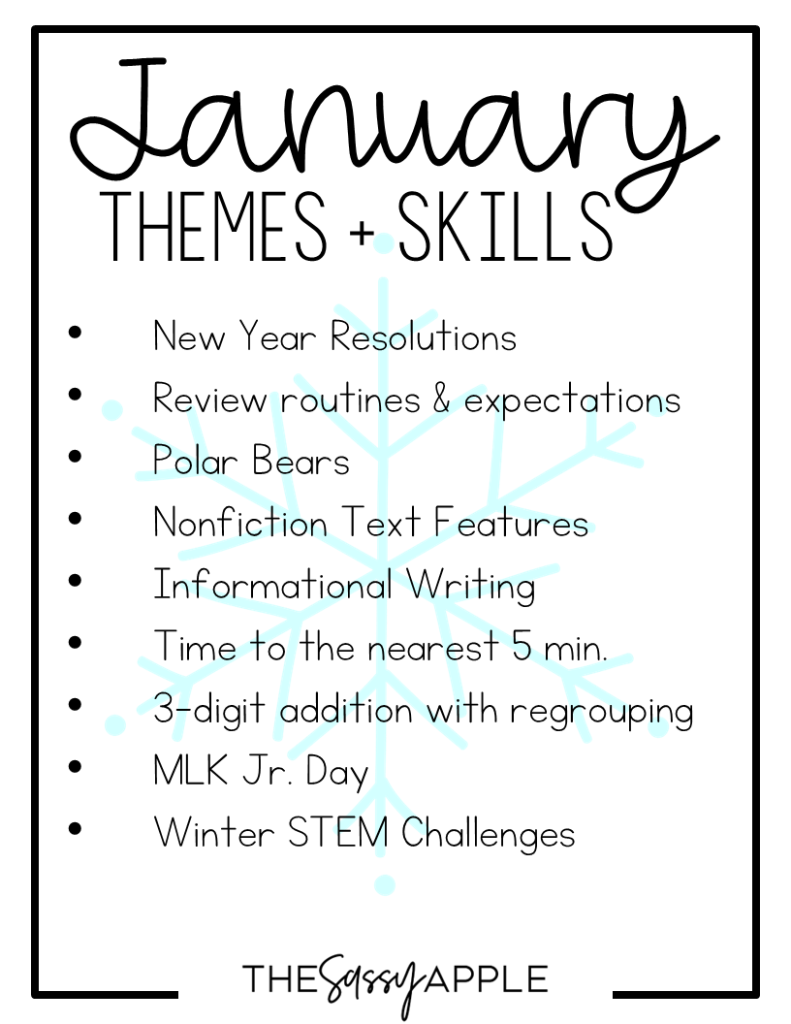
To keep everything organized, I created a January Themes & Skills Overview that outlines exactly what we focus on across reading, writing, math, and content areas for 1st and 2nd grade January Overview.
Here’s a closer look at how January shakes out in my classroom.
Reading: Nonfiction + Polar Bears 🐻❄️
January is prime time for nonfiction. Students are ready to move beyond basic comprehension and start exploring how informational texts work.
We focus heavily on:
- Identifying and using nonfiction text features
- Reading for facts vs. opinions
- Answering questions using evidence from the text
I pair this with a polar bear unit, which students absolutely love. Arctic animals are engaging, naturally lend themselves to nonfiction, and give us endless opportunities to integrate grammar and writing skills. Polar bears become the anchor for reading, grammar practice, and content learning all in one.
Grab this FREE Nonfiction Text Feature graphic organizer.
Writing: New Year + Informational Writing ✏️
January is also when I step up my writing expectations.
Students begin:
- Writing informational pieces connected to our polar bear research
- Using vocabulary from nonfiction texts
- Expanding sentences with more detail
- Increasing sentence quality in daily writing journals
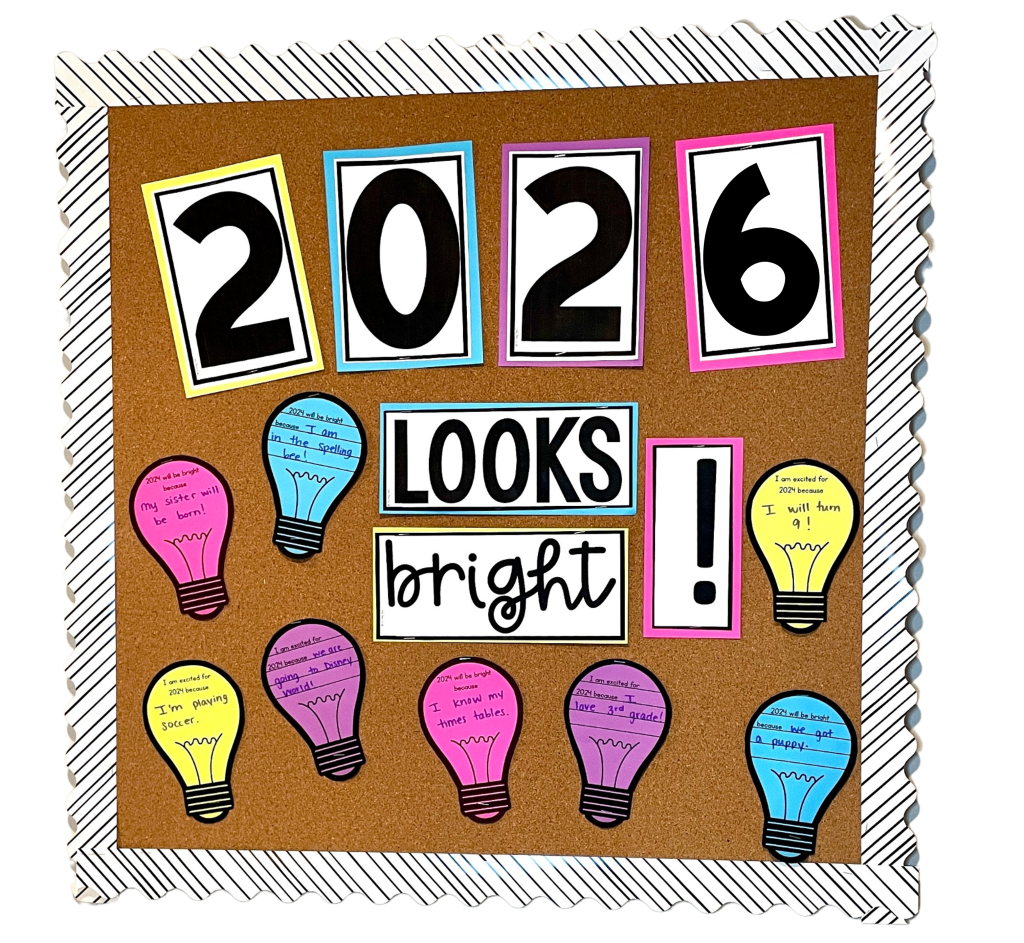
I also like to kick off the month with New Year-themed writing, which helps ease students back into writing after winter break. Giving students choices—different paper styles, vocabulary cards, and prompts—keeps writing engaging while still pushing growth.
Math: Time and 3-Digit Addition ⏰➕
Math in January is a mix of challenging and fun.
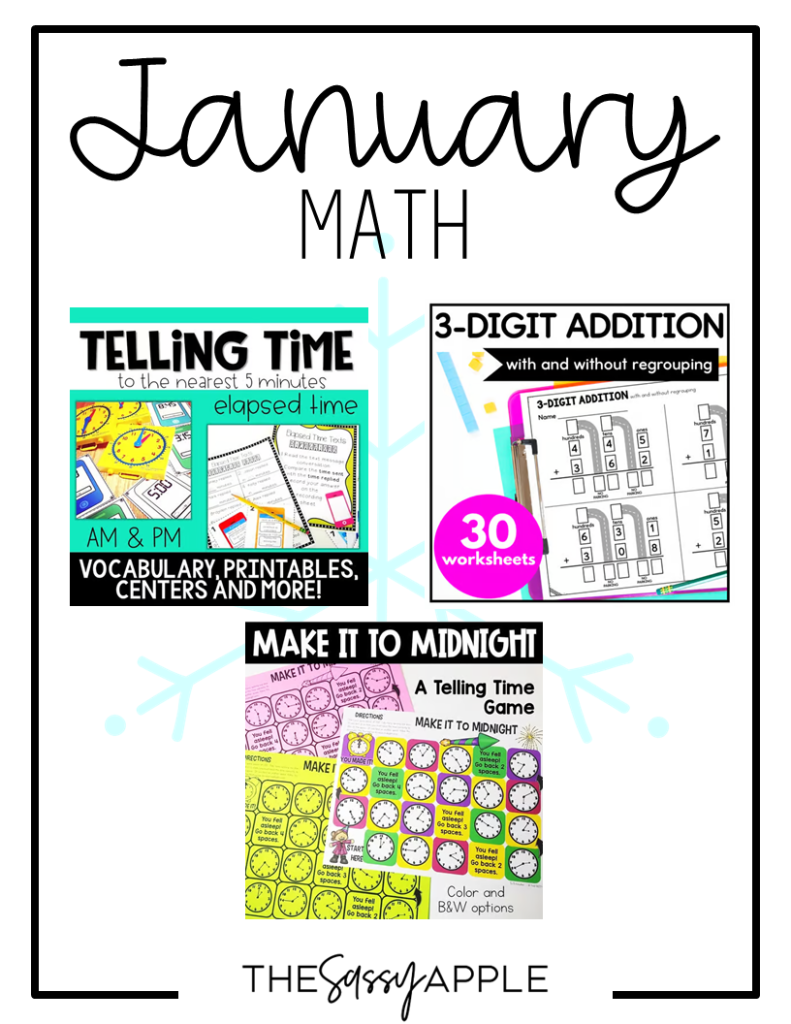
Telling Time
Teaching time is one of my favorite units. Students are highly engaged, especially once the clocks come out. We work on:
- Telling time to the nearest 5 minutes
- Understanding AM and PM
- Elapsed time
Hands-on practice and games (like Make It to Midnight) make this unit both effective and fun. For a more in-depth look at how I teach telling time, check out this blog post.
3-Digit Addition
On the other hand… 3-digit addition with regrouping can be a grind. We take it slow, use lots of visuals, and practice in a variety of ways so students don’t get overwhelmed. Having a clear monthly plan helps me pace this unit without rushing.
Content Areas: MLK Jr., STEM, and Expectations Review
January content learning is meaningful and intentional.
Martin Luther King Jr.
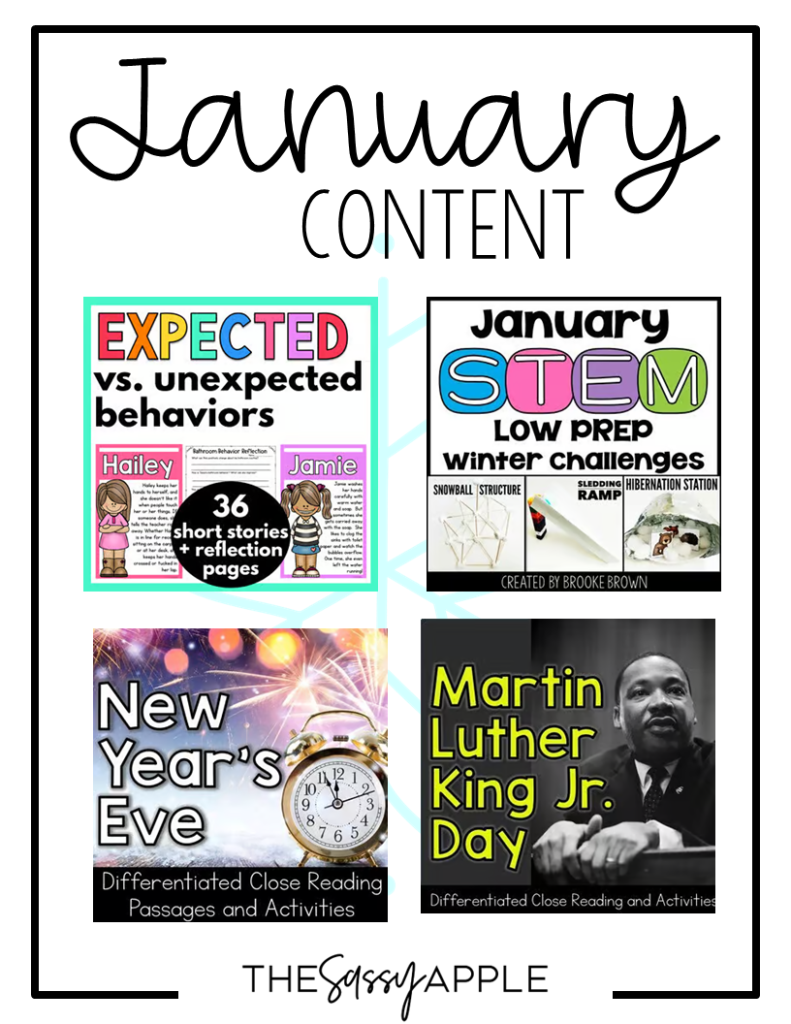
We explore Martin Luther King Jr. through close reading, discussion, and reflection. This ties beautifully into ELA while also supporting social studies standards.
Winter STEM
Winter STEM challenges are perfect for January—especially because they often carry over into February thanks to snow days and schedule changes. I love connecting STEM activities to our polar bear theme for added engagement.
Reviewing Expectations
After winter break, reviewing routines and expected behaviors is a must. January is a great time to reset expectations and explicitly teach what expected vs. unexpected behaviors look like in the classroom.
Why I Plan by the Month
Planning January in 2nd grade by themes and skills—not weeks—helps me:
- Stay flexible when lessons run long
- Keep learning connected across subjects
- Reduce stress when plans inevitably shift (think 2-hour delays and snow days!)
The January Overview acts as my roadmap. I still plan week to week, but this gives me the big picture so nothing important gets missed.
Grab the January Overview
You can download the January Themes & Skills Overview to see everything laid out in one place. Each page links directly to the resources shown—just click the images in the document to access them.