

R-Controlled Vowels is where phonics gets a little funkier real fast. Short vowels were a breeze. Long vowels throw them for a loop. And next, you have 5 new phonics patterns to remember how to read and spell. The problem is when you try to teach r-controlled vowels with too many disconnected activities and no clear plan. I am going to show you exactly how to teach r-controlled vowels in 2 weeks without overcomplicating it.
What Are R-Controlled Vowels?
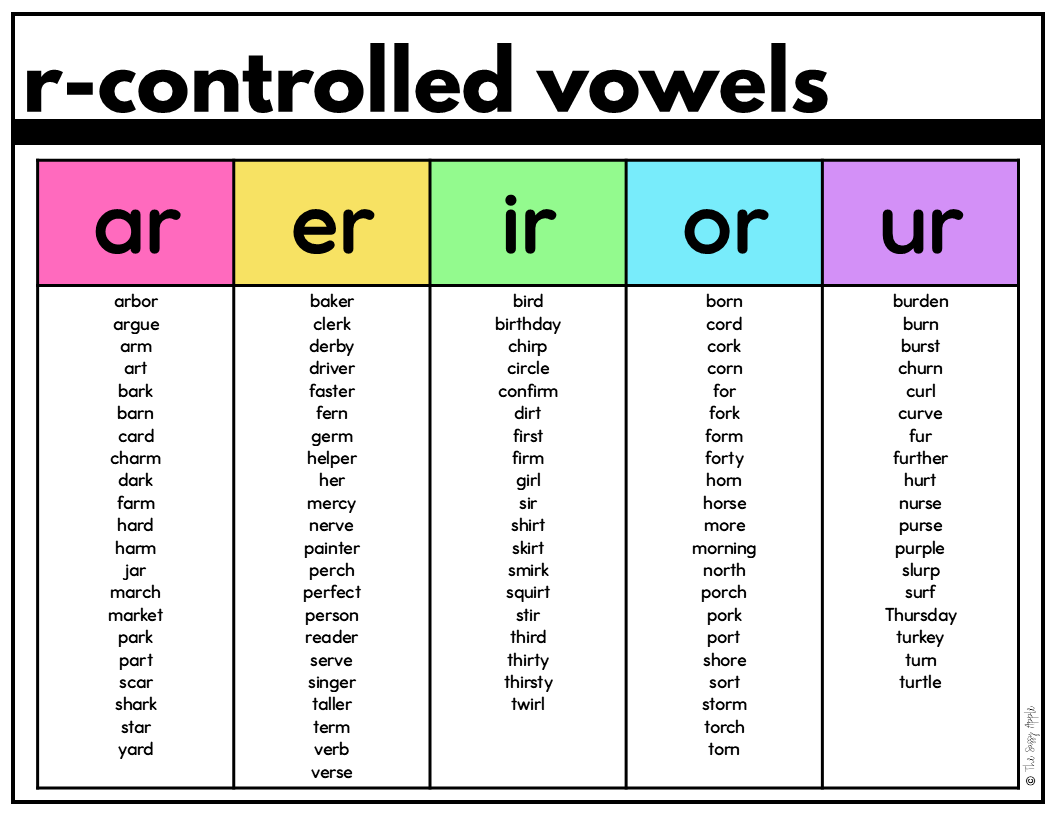
R-controlled vowels, also known as vowel-r, syllable includes the patterns: ar, er, ir, or, ur. Ar and or typically make distinct sounds and feel more predictable. While er, ir, and ur all spell the same sound. This makes it challenging to teach when to use which spelling. Keep in mind, “er” is the most common and appears in approximately 77% of words that have /er/.
Week 1: AR + OR
Week 1 is all about building a strong foundation. That begins with the easier of the r-controlled vowels. Start with the two patterns that are the most distinct and easiest to hear.
👉 ar (like car, star, park)
👉 or (like corn, fork, storm)
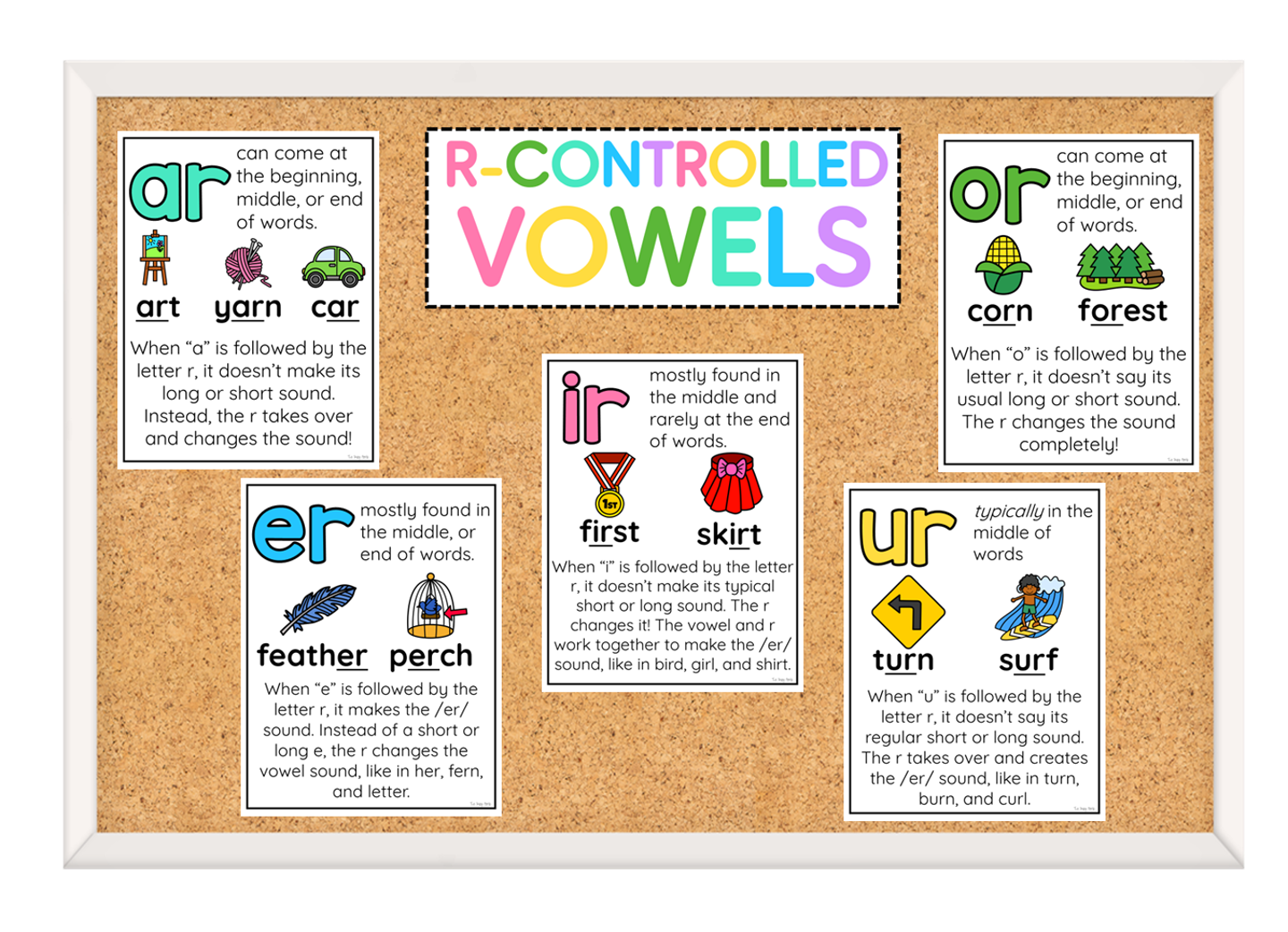
These two give students early success, which builds confidence right away. These posters will help you teach r-controlled vowels and provide a reference to support students’ learning.
✏️ What This Week Looks Like
Each day should follow a simple, repeatable routine:
1. Introduce the Pattern
- Explicitly model the sound
- Connect it to a keyword (car, corn)
- Practice saying and hearing the sound
2. Read & Sort Words
- Sort words by ar vs or
- Read them out loud (multiple times!)
3. Build Words
- Use magnetic letters or whiteboards
- Focus on mapping the vowel + r together
4. Apply in Context
- Read simple phrases or sentences
- Keep it short and successful
🎯 By the End of Week 1, Students Should:
✔️ Recognize and read ar and or words
✔️ Understand that the r controls the vowel sound
✔️ Begin to confidently decode simple words
Week 2: ER, IR, UR (yes, they all sound the same)
Welcome to the part where students start questioning everything 😅
In Week 2, you’ll introduce er, ir, and ur—also known as the “they all sound the same, so now what?” group.
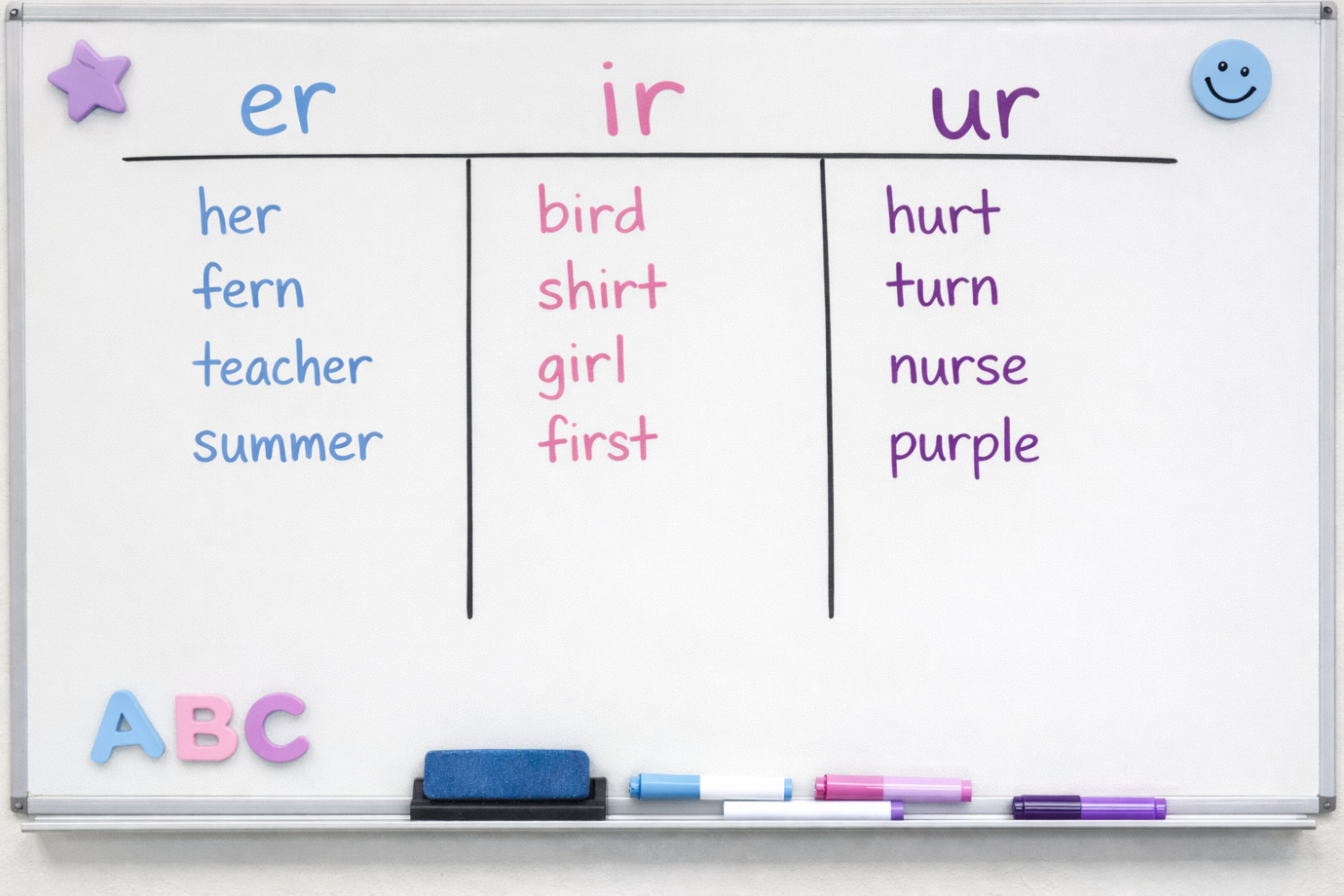
👉 er (her, teacher)
👉 ir (bird, shirt)
👉 ur (turn, nurse)
Unlike ar and or, these patterns don’t have clearly different sounds. That’s what makes them trickier—and why students need a LOT of exposure and practice this week.
✏️ What This Week Looks Like
1. Introduce all three patterns
- Model the sound
- Connect to a keyword (her, bird, turn)
- Say it, hear it, read it
- Explain that “er” is used about 77% of the time
2. Word Sorting is Your Best Friend
- Sort words into er / ir / ur
- Talk through WHY words go where (even if it’s “we just have to remember this one”)
3. Dictation
- Teach students that if they aren’t sure, they should try each of the patterns and try to visualize which one “looks right”
4. Read, Read, Read
- Mixed word lists
- Simple sentences
- Short passages
⚠️ Be Honest About the Challenge
This is the part where phonics isn’t perfectly “rule-based.”
And that’s okay.
Let students know:
👉 Sometimes we have to try a sound and see if it makes sense
👉 Sometimes we just need repetition and exposure
This actually builds stronger, more flexible readers.
🎯 By the End of Week 2, Students Should:
✔️ Recognize er, ir, and ur patterns
✔️ Begin sorting and identifying them in words
✔️ Read r-controlled words with improved fluency
✔️ Apply strategies when unsure (try it, check it, fix it)
Week 3 (optional): Review + Apply
If you have the time to spend a third week reviewing, this is where it really comes together. This is your chance to move beyond word lists and into what actually matters:
👉 reading and writing with r-controlled vowels in real contexts
By now, students have been introduced to all five patterns and have had practice comparing them. Week 3 is all about strengthening those skills so they actually stick.
✏️ What This Week Looks Like
Think: less isolated practice, more real application.
1. Spiral Review All Patterns
- Mix ar, or, er, ir, ur together daily
- Quick word sorts or warm-ups
- Keep it short but consistent
2. Read in Connected Text
- Short passages with multiple r-controlled words
- Have students highlight or hunt for patterns
- Reread for fluency
3. Apply Through Writing
- Sentence writing using target words
- Fill-in-the-blank with multiple pattern choices
- Encourage students to explain their thinking (“Why did you choose ir?”)
4. Bring It Into Real Reading
- During small group or independent reading, prompt:
👉 “Do you see any r-controlled vowels?”
👉 “Try the sound—does it make sense?”
Activities That Work
Word Sorts
These don’t have to be printed in color and laminated. Write some words on index cards. Have kids make their own word sorts and then swap with a partner. Start with ar/or and then add in er/ir/ur words. After students sort, I have them read each set of cards. For fast finishers, I challenge them to find a different way to sort the words–and I am always impressed with their creativity!
Dictation
Dictation should be a DAILY practice in your phonics lessons. Whether it’s on paper, in a notebook, or on whiteboards, students NEED to practice spelling the phonics pattern they just learned sprinkled with some review of previous skills.
R-Controlled Vowel Scoot
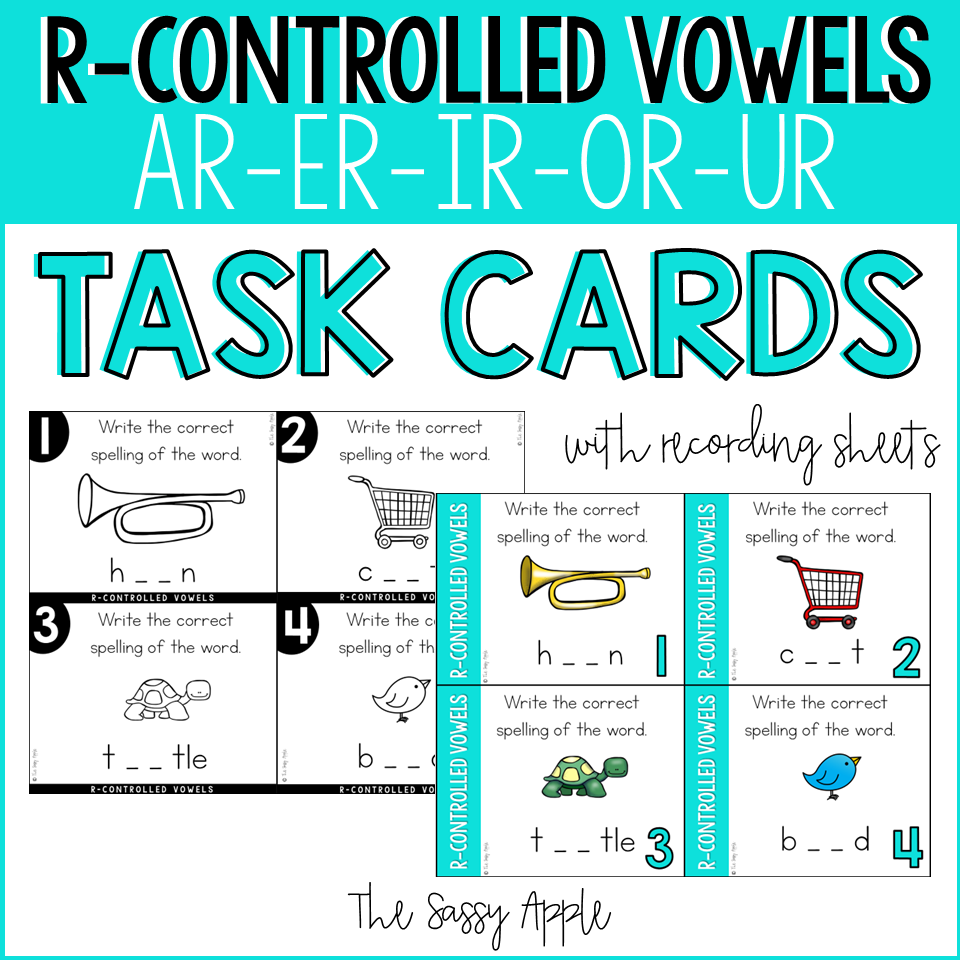
Scooting around the room is one of my favorite ways to get kids up and moving while practicing a skill. Practicing skills with scoots allows students the opportunity to learn through much-needed movement! This activity will keep your students engaged, active, and having fun while showing what they know about r-controlled vowels. Grab it here!
Decodable Practice
Applying the skill to text is the ultimate goal! Using decodable passages or books with r-controlled vowels will help you identify which students are able to connect their knowledge to text, and which students need additional support. Check out my favorite decodable books here!
Done-For-You Vowel R Activities
If you’d rather skip the planning and have everything laid out for you, you can grab my full r-controlled vowel bundle. It includes everything you need to teach all five patterns in a clear, structured way—without scrambling for materials each day.
R-Controlled Vowel Activities Bundle
Teaching r-controlled vowels doesn’t have to feel overwhelming—for you or your students. When you keep the plan simple, focus on patterns, and build in consistent review, students start to make sense of what once felt confusing.
Whether you pull together your own activities or want something ready to go, the goal is the same: give students repeated, meaningful practice with these patterns so they can actually apply them when reading and writing.