

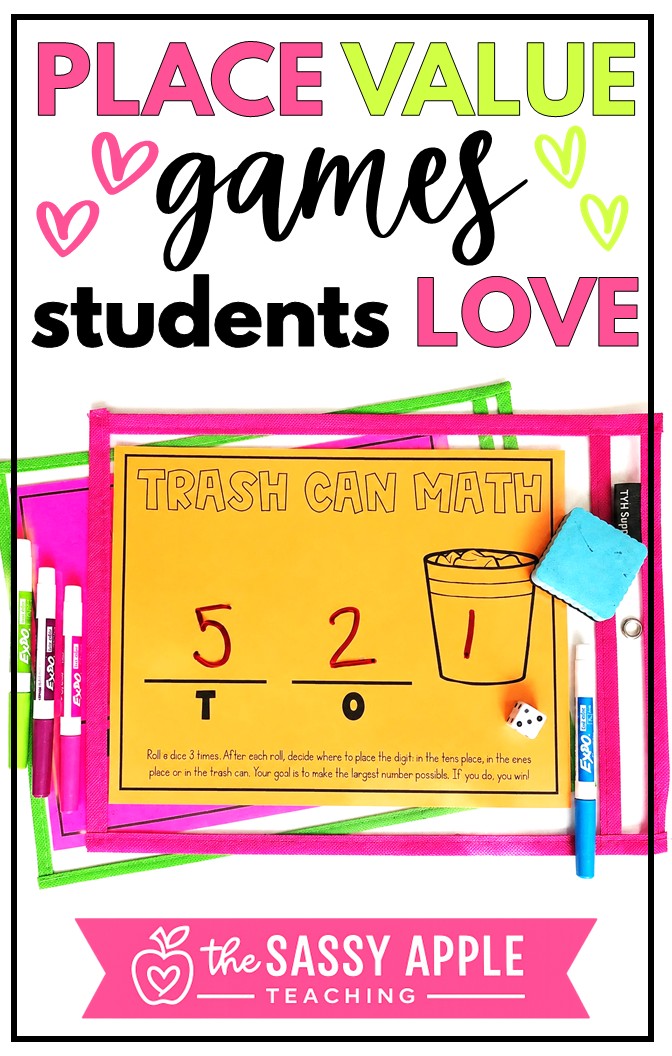
Looking for place value games that students actually ask to play? Trash Can Math is one of my favorite beginning-of-the-year math activities because it combines place value, strategy, and just the right amount of friendly competition. Best of all, it’s low prep and takes only a few minutes to explain.
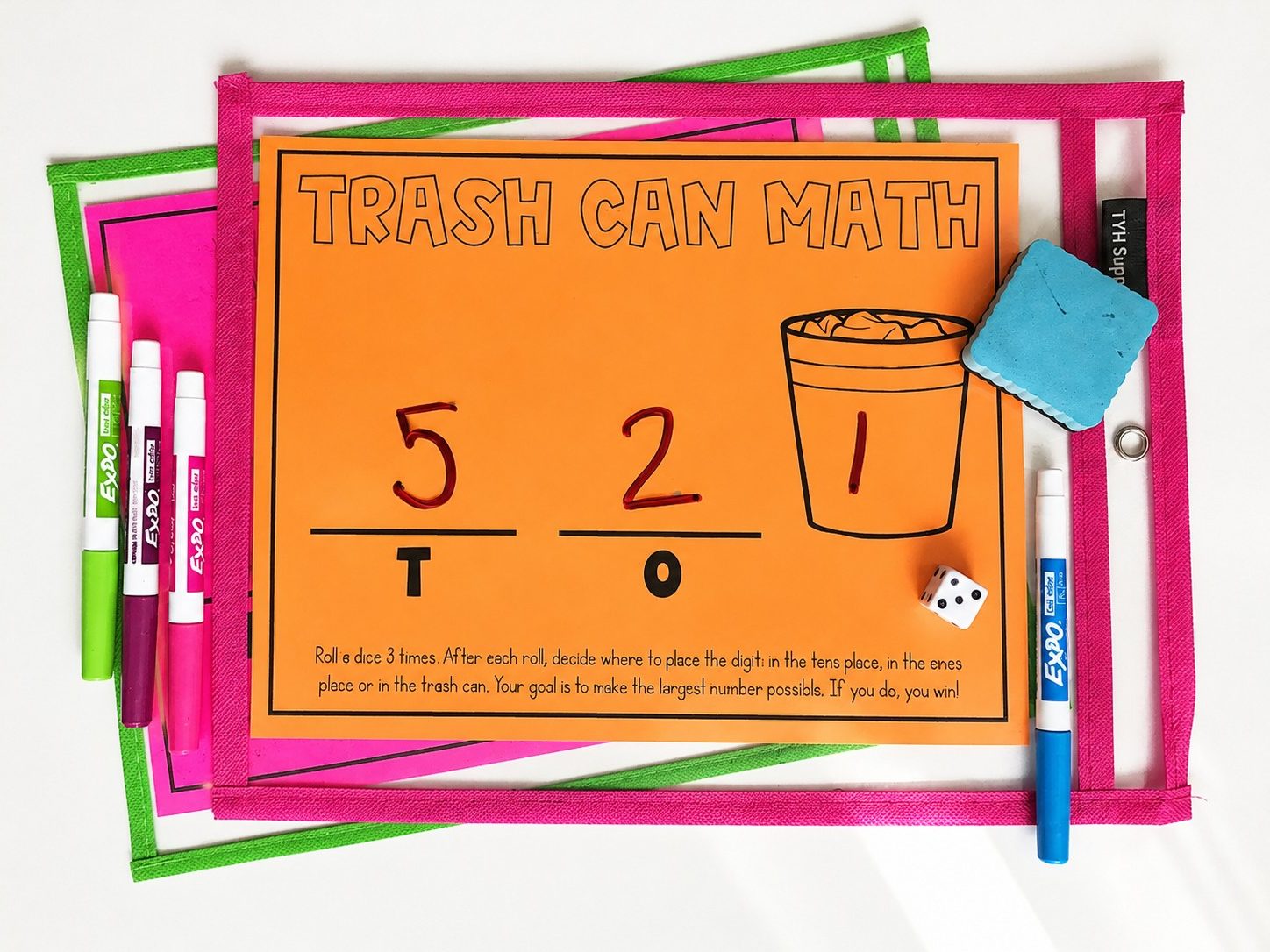
What is Trash Can Math?
I learned this game two years ago when I was filling in for a teacher on maternity leave. We actually had four days together to transition the class (which, looking back, was amazing!). I learned so many great teaching ideas from her—including this one.
Here’s the funny part: her last name was Stahl too! Since I was getting married that September, I started the school year as Miss Fitzpatrick and became Mrs. Stahl a few weeks later. So, for a short time, Mrs. Stahl was filling in for Mrs. Stahl. We even warned the parents ahead of time so they wouldn’t wonder why pregnant Mrs. Stahl had magically returned to school two weeks after having a baby!
Thankfully, the game itself is much less confusing than our names. 😊
Although it’s called Trash Can Math, there aren’t actually any trash cans involved!
I include this place value game in my first week of school plans every single year because it’s an easy way to review place value while getting students excited about math.
How to Play this Place Value Game
You’ll need:
- One die
- A whiteboard and dry-erase marker or the printable Trash Can Math game mat
- An eraser (optional)
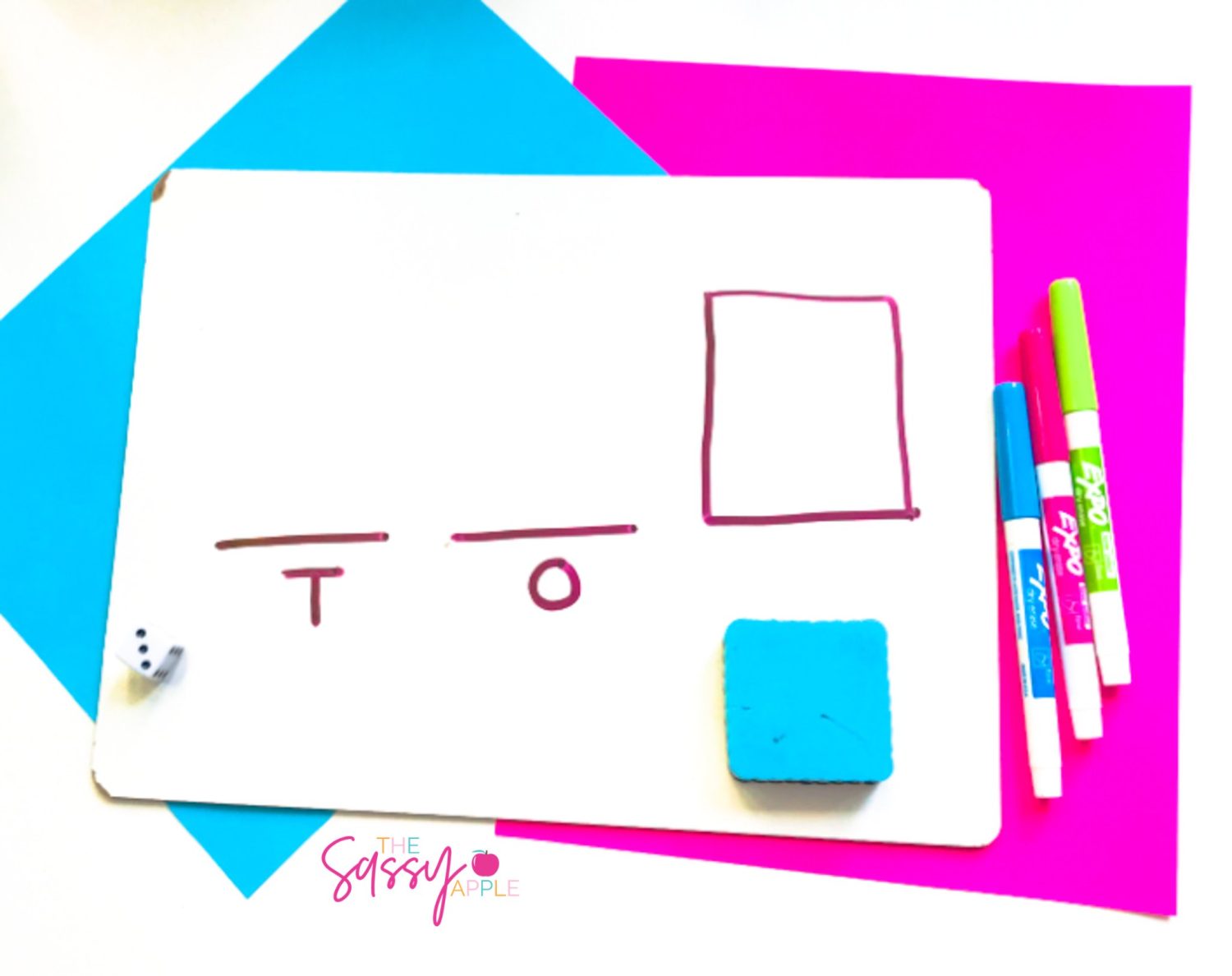
The objective is simple: students are trying to build the largest number possible.
Here’s how to play:
- Roll the die.
- Decide whether to place the digit in the tens place, ones place (or hundreds place if you’re using three-digit numbers), or throw it in the “trash can.”
- Once a digit has been placed, it cannot be moved.
- Continue rolling until all places are filled.
- The student with the largest number wins!
The challenge—and the strategy—comes from deciding before the next roll where each digit belongs. Do you put that 5 in the tens place, hoping you don’t roll a 6? Or do you risk waiting for something better?
For example, after choosing a student to roll, let’s say they roll a 2. That’s usually an easy decision—you’ll probably want to throw it in the trash can. Of course, there’s always a little risk because you could roll a 1 next, but there’s also a much better chance of rolling a 3, 4, 5, or 6.
Instead of telling students what to do, ask for their opinions. Make them do the thinking!
Now imagine the next roll is a 4. Suddenly the decision gets a lot trickier. Do you place it in the tens place and hope you don’t roll a 5 or 6? Or do you save that spot and risk rolling a 1, 2, or 3?
This is where the magic happens. Students are analyzing probability, comparing possibilities, and making strategic decisions—all while practicing place value.
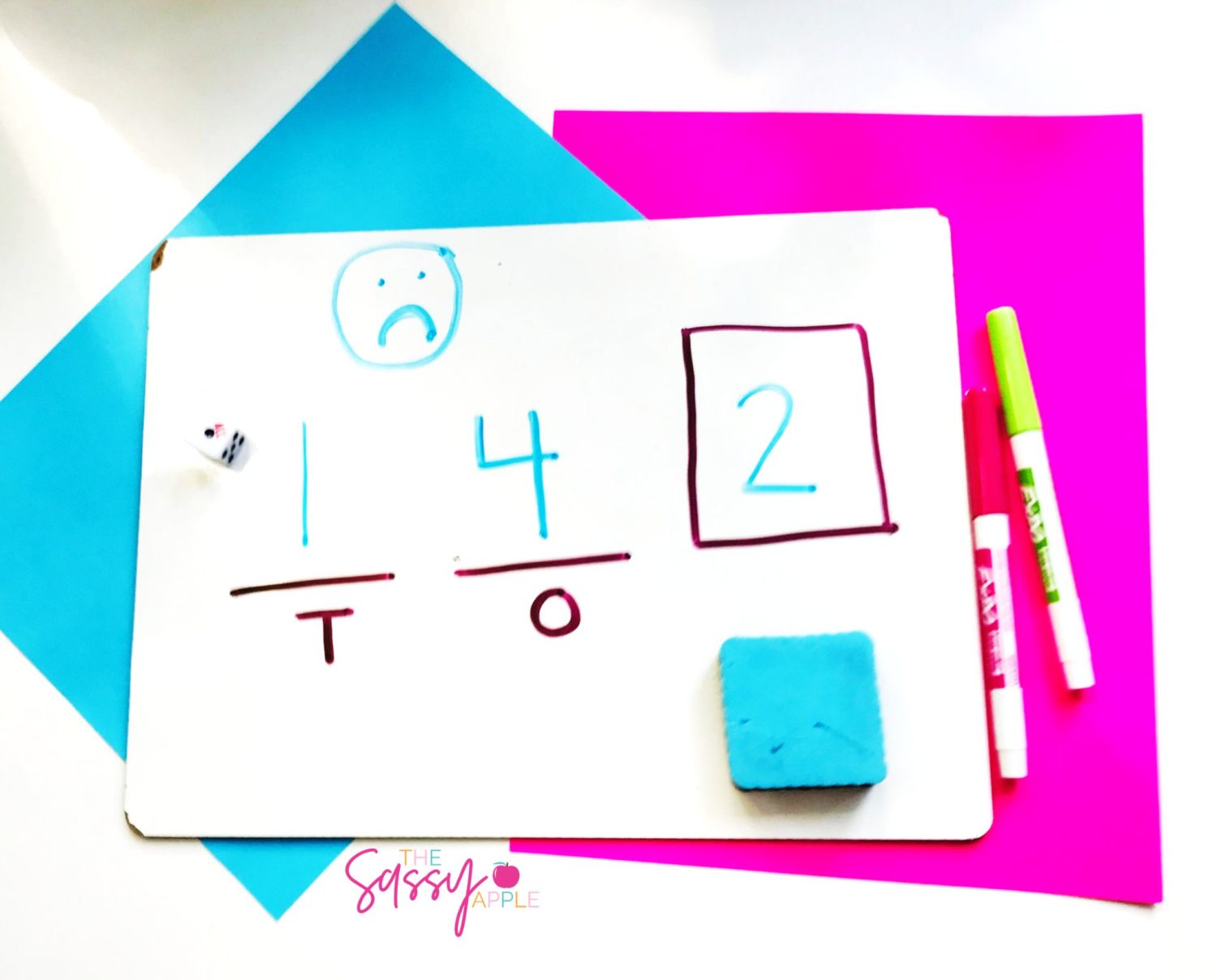
The final roll is easy—it goes in the last remaining spot. Once every place is filled, compare your number to the goal. Did your strategy pay off, or would you make different decisions next time?
Why Trash Can Math Works
This game is so much more than rolling a die. During the first few games, I have the class make every decision together. We discuss our thinking and agree on where to place each number. Once everyone understands the strategy, students begin making their own choices while I circulate and ask questions about their thinking.
Every turn asks students to evaluate risk, make predictions, and justify their thinking. They’re constantly asking themselves:
- Should I keep this number?
- Can I risk waiting for something bigger?
- What’s the smartest move?
That’s some pretty impressive mathematical thinking for such a simple game!
The first few rounds are especially fun because everyone makes mistakes together. Then, as students gain confidence, they begin making their own strategic choices.
And yes…there’s always that one student who confidently throws away a 5 because they’re convinced they’ll roll two sixes next.
There’s also always that sneakster who suddenly develops an irresistible urge to erase a number after realizing they could have made a bigger one. 😂
Free Printable Place Value Game Mat
I usually play using whiteboards, but I also created a printable game mat that works perfectly in dry-erase sleeves or laminated sheets.
👉 Click here to download your free printable Place Value Game Mat.
One year I even bought giant inflatable dice for this game. Unfortunately, I forgot to blow one up ahead of time…and I happened to be nine months pregnant. Let’s just say inflating a giant die wasn’t in the cards that morning!
Thankfully, I found a virtual dice roller, and it ended up working just as well. Many virtual dice even let you choose different number ranges, making it easy to adapt the game for different skills.
One of my favorite things about Trash Can Math is how flexible it is. Play for five minutes as a warm-up, spend longer discussing strategy as a whole class, or add hundreds and thousands to increase the challenge. Once students know the rules, it also makes a fantastic math center or early finisher activity.
I hope your students enjoy Trash Can Math as much as mine do! It’s one of those simple games that gets students thinking, talking, and practicing place value without feeling like “just another worksheet.” If you give it a try, I’d love to hear how it goes in your classroom!
Looking for more math ideas? Check out this post
That is a great game. Thanks!